Symptoms of Vitamin D Deficiency
What is Vitamin D Deficiency?
Vitamin D Deficiency occurs when the body does not get enough vitamin D for proper functioning. Vitamin D is important for strong bones, muscles, immunity, and overall health.
Low vitamin D levels have become very common due to indoor lifestyles, poor diet, and lack of sunlight exposure.
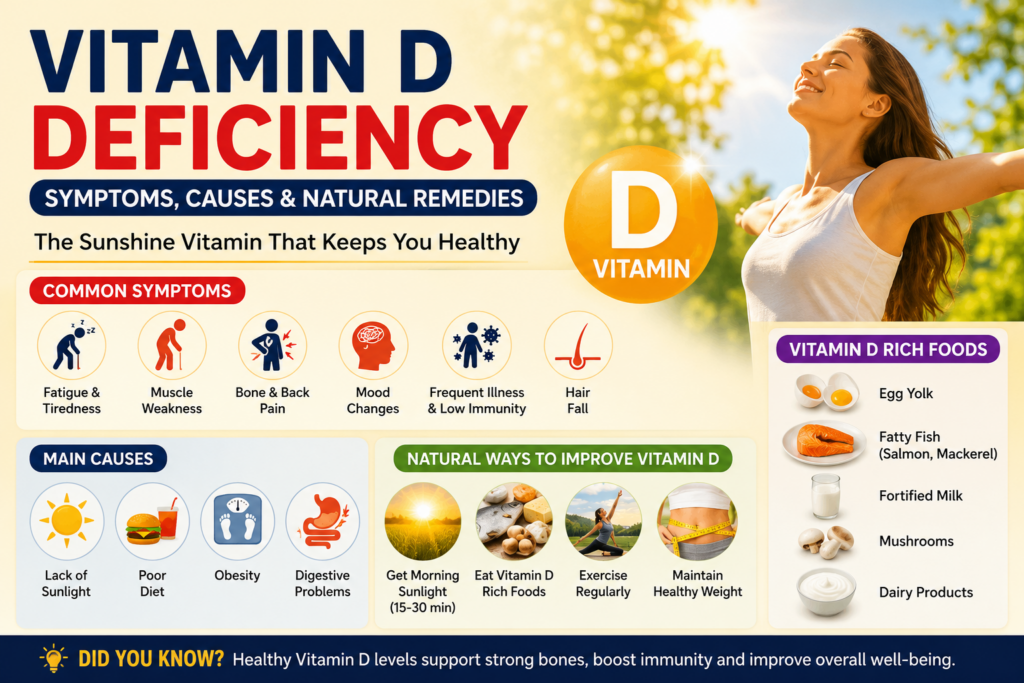
Common Symptoms of Vitamin D Deficiency
Some common symptoms include:
- Constant tiredness and fatigue
- Weakness in muscles
- Bone or joint pain
- Back pain
- Mood changes
- Hair fall
- Frequent illness or low immunity
In many people, symptoms may develop slowly and remain unnoticed.
Main Causes of Vitamin D Deficiency
1. Lack of Sunlight
Vitamin D is naturally produced when sunlight hits the skin. Spending less time outdoors may reduce vitamin D levels.
2. Poor Diet
A diet lacking vitamin D-rich foods can contribute to deficiency.
3. Obesity
Excess body fat may affect vitamin D absorption and storage.
4. Digestive Problems
Certain digestive conditions can reduce nutrient absorption.
Best Natural Ways to Improve Vitamin D
1. Morning Sunlight
Getting early morning sunlight for 15–30 minutes may help the body produce vitamin D naturally.
2. Eat Vitamin D Rich Foods
Include foods such as:
- Egg yolk
- Fatty fish
- Fortified milk
- Mushrooms
- Dairy products
3. Exercise Regularly
Regular physical activity may support better bone and muscle health.
4. Maintain Healthy Weight
Healthy weight management can help improve overall health and nutrient balance.
Can Vitamin D Deficiency Be Serious?
If left untreated for a long time, Vitamin D Deficiency may affect bones, muscles, and immunity. Severe deficiency can increase the risk of weak bones and fractures.
Conclusion
Vitamin D plays an important role in maintaining overall health. Proper sunlight exposure, balanced diet, and healthy lifestyle habits may help maintain healthy vitamin D levels naturally.
High Cholesterol
FAQ Section
What are the symptoms of vitamin D deficiency?
Common symptoms include fatigue, weakness, bone pain, muscle pain, and low immunity.
How can I increase vitamin D naturally?
Morning sunlight, vitamin D-rich foods, exercise, and healthy lifestyle habits may help improve vitamin D levels.
Which foods contain vitamin D?
Egg yolk, fatty fish, fortified milk, mushrooms, and dairy products contain vitamin D.
Can low vitamin D cause tiredness?
Yes, low vitamin D levels may contribute to fatigue and weakness in some people.
Who Is More at Risk of Vitamin D Deficiency?
People who spend less time in sunlight, follow unhealthy diets, or have obesity may have a higher risk of vitamin D deficiency. Older adults and people with digestive disorders may also be affected.
Individuals who spend most of their time indoors or have limited outdoor activities may also experience low vitamin D levels. Poor lifestyle habits and lack of physical activity can further increase the risk.
Best Foods for Vitamin D
Some foods may help support healthy vitamin D levels naturally. Including nutrient-rich foods in your daily diet can be beneficial for overall health and bone strength.
Foods rich in vitamin D include:
- Egg yolk
- Fatty fish
- Fortified milk
- Mushrooms
- Cheese
- Yogurt
A balanced diet along with regular sunlight exposure may help maintain healthy vitamin D levels naturally.
ये section भी add कर दो 👍
इससे आसानी से 800+ words हो जाएंगे।
Health Problems Linked With Low Vitamin D
Vitamin D Deficiency may affect different parts of the body. Low vitamin D levels can sometimes contribute to weakness, fatigue, and poor immunity. In some individuals, long-term deficiency may affect bone strength and muscle health.
Some health problems that may be associated with low vitamin D include:
- Weak bones
- Muscle pain
- Fatigue and tiredness
- Joint discomfort
- Frequent illness
- Low energy levels
Maintaining healthy vitamin D levels is important for overall wellness and daily functioning.
How to Prevent Vitamin D Deficiency
There are several natural ways that may help maintain healthy vitamin D levels.
1. Take Morning Sunlight
Early morning sunlight exposure for around 15–30 minutes may help the body naturally produce vitamin D.
2. Eat Balanced Meals
A healthy diet containing vitamin D-rich foods may support better nutrition and overall health.
3. Stay Physically Active
Regular walking, exercise, and outdoor activities may help support healthy bones and muscles.
4. Maintain Healthy Weight
Healthy weight management may improve overall health and nutrient balance.
5. Avoid Unhealthy Lifestyle Habits
Poor diet, lack of sleep, and inactive lifestyle habits may negatively affect health over time.
Importance of Vitamin D for the Body
Vitamin D plays an important role in maintaining healthy bones, muscles, and immunity. It also supports calcium absorption in the body.
Healthy vitamin D levels may help support:
- Bone strength
- Muscle function
- Immune system health
- Overall energy levels
- Daily physical performance
Because of modern indoor lifestyles, many people may not get enough natural sunlight exposure.
Final Thoughts
Vitamin D Deficiency is becoming increasingly common due to modern lifestyle habits and reduced sunlight exposure. Healthy eating, outdoor activity, and balanced daily habits may help support healthy vitamin D levels naturally.
Simple lifestyle improvements may positively affect overall health and well-being over time.